
AWS Step Functions make it easier to orchestrate complex workflows across Lambda, SQS, EventBridge, Bedrock, DynamoDB, and many other AWS services. But testing those workflows directly in AWS can quickly become frustrating and expensive.
Every deployment cycle introduces delays. Every test execution creates additional AWS costs. Debugging often means digging through logs spread across multiple services.
This is why more teams are moving toward local-first workflow development.
Testing Step Functions locally allows developers to:
- Build workflows faster
- Debug visually before deployment
- Reduce AWS Lambda and Step Functions costs
- Test edge cases safely
- Iterate without waiting for cloud deployments
- Experiment with orchestration patterns more confidently
For beginners, local testing also removes much of the complexity that comes with cloud-only development.
What Does It Mean to Test Step Functions Locally?
Local Step Functions testing means running your state machines on your own machine instead of executing every workflow in AWS.
This includes:
- Running Amazon States Language (ASL) workflows locally
- Executing Lambda functions without deploying
- Simulating service integrations
- Testing inputs and outputs
- Visualizing execution flow
- Debugging failures in real time
Instead of continuously pushing changes to AWS, developers can build and validate workflows entirely on their desktop.
The Problem With Traditional Cloud-Only Workflow Development
A common Step Functions workflow cycle looks like this:
- Edit state machine JSON
- Deploy to AWS
- Deploy Lambda updates
- Execute workflow
- Open CloudWatch logs
- Diagnose issue
- Repeat
This cycle becomes especially painful for larger workflows involving:
- Parallel states
- Map states
- Nested executions
- Event-driven orchestration
- AI workflows using Bedrock
- Queue-based architectures with SQS
- EventBridge integrations
Even small changes can require multiple redeployments.
AWS Step Functions pricing is based on state transitions, which means repeated debugging and testing can quietly increase costs over time.
What Is Thrubit?
Thrubit is a local workflow orchestration platform designed for AWS Step Functions development.
It allows developers to:
Start free. No AWS account needed.
ZERO AWS costs.
Download Thrubit and run your first state machine locally in under five minutes. No cloud setup, no IAM policies, no waiting.
- Run Step Functions locally
- Execute real Lambda functions locally
- Visually debug state machines
- Test AWS service integrations
- Simulate workflows without cloud deployments
- Reduce AWS development costs to nearly zero during testing
Thrubit focuses heavily on local-first workflow development while still maintaining compatibility with real AWS Step Functions patterns.
How Thrubit Helps Test Step Functions Locally
Local State Machine Execution
Thrubit executes Amazon States Language workflows directly on your machine.
This includes support for common Step Functions states such as:
- Task
- Choice
- Pass
- Parallel
- Map
- Wait
- Succeed
- Fail
Developers can execute workflows repeatedly without redeploying anything to AWS.
Visual Workflow Debugging
One of the biggest advantages of Thrubit is visual debugging.
Instead of tracing raw logs manually, developers can watch execution move through each state in real time.
This makes it easier to debug:
- Conditional logic
- Failed Lambda responses
- Incorrect ResultPath mappings
- JSONPath issues
- Parallel execution behavior
- Map state iteration problems

For complex orchestrations, visual debugging dramatically reduces troubleshooting time.
Execute Lambda Functions Locally
Thrubit supports real Lambda execution locally.
Instead of mocking every function, developers can run actual Node.js or TypeScript Lambda handlers directly from their local filesystem.
This allows workflows to behave much closer to production environments while still avoiding deployment cycles.
Example workflow flow:
- Start local Step Function
- Execute local Lambda
- Pass output to next state
- Continue orchestration locally
This creates a much faster feedback loop.
Testing Step Functions With SQS Locally
Modern workflows often rely on queues.
Thrubit supports local SQS testing so developers can validate:
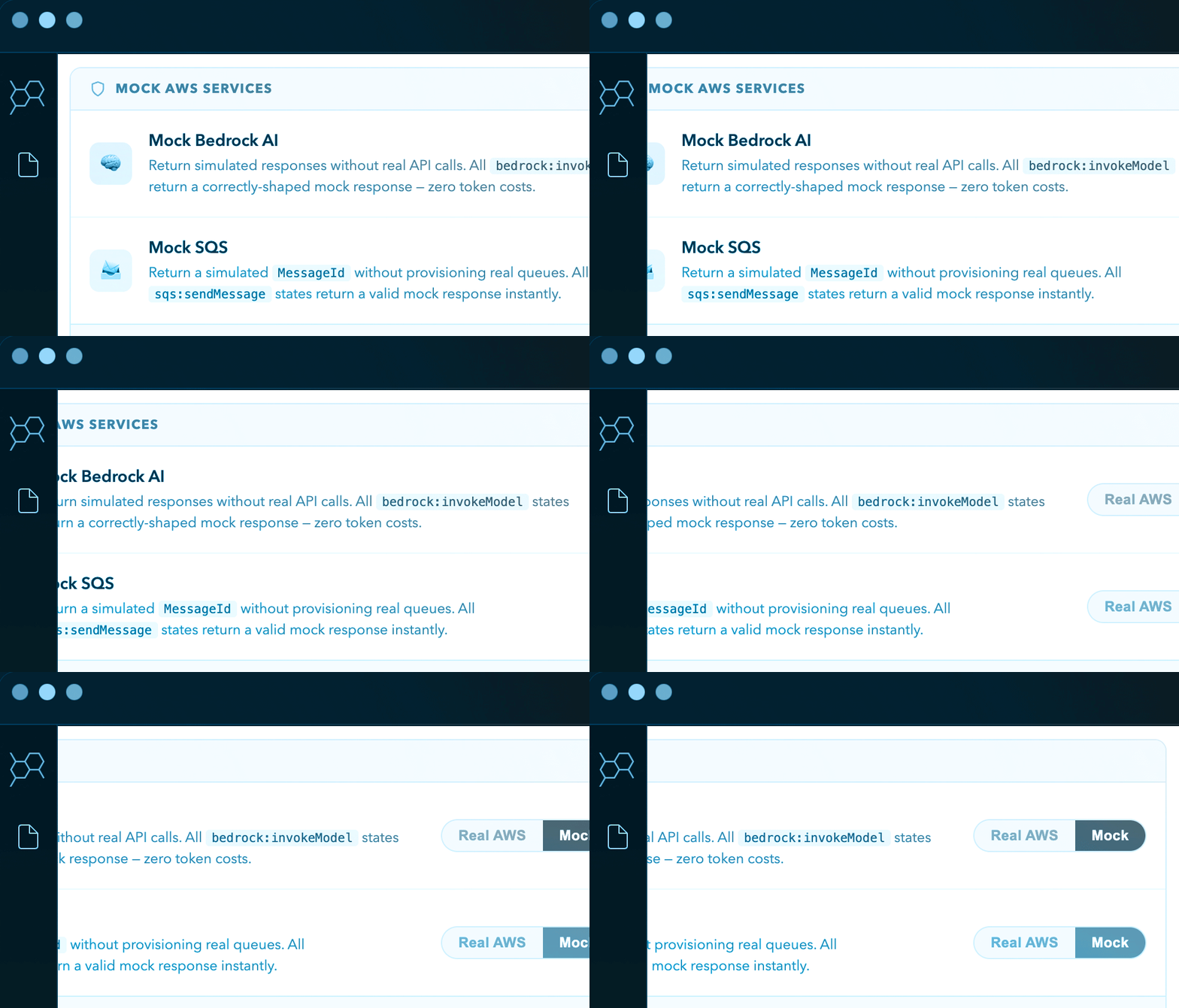
- Message payloads
- Queue-driven workflows
- waitForTaskToken patterns
- Async processing logic
- Queue orchestration behavior
Without local testing, queue debugging can become extremely time consuming.
Local EventBridge Workflow Testing
Event-driven architectures are increasingly common in AWS environments.
Thrubit includes local EventBridge testing support for:
events:putEvents- Event payload validation
- Event-driven state transitions
- Mock event routing
- Local workflow triggering
This allows developers to test distributed orchestration patterns entirely on their machine.
Testing Bedrock Workflows Locally
AI orchestration is becoming a major use case for Step Functions.
Many developers now combine:
- Amazon Bedrock
- Lambda
- DynamoDB
- EventBridge
- SQS
- Step Functions
into larger AI workflows.
Thrubit supports local Bedrock testing with mock responses, allowing developers to build AI workflows without constantly consuming inference credits or API costs.
This is especially valuable during rapid experimentation phases.
Example Step Function Workflow
A simple local workflow might include:
- Input validation
- Lambda execution
- Choice state routing
- EventBridge notification
- SQS message publishing
- Final response handling
Example ASL structure:
{
  "StartAt": "ValidateInput",
  "States": {
    "ValidateInput": {
      "Type": "Task",
      "Resource": "arn:aws:states:::lambda:invoke",
      "Next": "ProcessOrder"
    },
    "ProcessOrder": {
      "Type": "Task",
      "Resource": "arn:aws:states:::lambda:invoke",
      "End": true
    }
  }
}Thrubit can execute workflows like this locally while visually displaying execution progress.
Common Things Developers Test Locally
Choice State Logic
Choice states can become difficult to debug in AWS because small JSONPath mistakes often break routing.
Thrubit helps developers validate branching behavior quickly.
Map State Iteration
Map states are powerful but notoriously difficult to troubleshoot at scale.
Developers often test:
- Batch processing
- Iteration payloads
- MaxConcurrency behavior
- ItemReader inputs
- Aggregated outputs
locally before pushing workflows into AWS.
Parallel State Coordination
Parallel orchestration introduces complexity around:
- Synchronization
- Error handling
- Branch output merging
- State timing
Visual local testing makes these workflows much easier to understand.
Why Local Development Matters for Beginners
Many developers first learning Step Functions struggle because cloud-only workflows feel abstract.
Local development creates a much more approachable learning environment.
Beginners can:
- Run workflows repeatedly
- Experiment safely
- Learn ASL faster
- Understand orchestration visually
- Avoid surprise AWS costs
This makes workflow orchestration significantly easier to learn.
Local Testing Also Helps Senior Teams
Local Step Functions testing is not only for beginners.
Larger engineering teams use local orchestration workflows to:
- Reduce development costs
- Speed up onboarding
- Improve workflow quality
- Shorten deployment cycles
- Catch issues earlier
- Standardize debugging practices
The larger the workflow architecture becomes, the more valuable local testing typically becomes.
Cloud Deployment Still Matters
Local testing does not replace AWS entirely.
Most teams still deploy to AWS for:
- Staging
- Integration testing
- Production workloads
- Security validation
- Real infrastructure scaling
The goal is to shift most debugging and iteration earlier into local development.
A common workflow strategy becomes:
- Develop locally
- Test locally
- Debug visually
- Deploy when stable
This dramatically reduces unnecessary cloud executions.
Why More Teams Are Moving Beyond Traditional Step Functions Local Tools
Older local Step Functions approaches often feel limited because they:
- Require Docker complexity
- Lack visual debugging
- Do not execute real Lambdas well
- Have incomplete service integration support
- Still depend heavily on AWS infrastructure
Modern orchestration teams increasingly want:
- Faster local iteration
- Better debugging experiences
- Lower cloud costs
- More realistic local execution
- Better developer experience
This shift is one reason platforms like Thrubit are gaining attention among serverless developers.
Building Workflows Faster with Thrubit
Testing AWS Step Functions locally can dramatically improve development speed, debugging quality, and cost predictability.
As workflows become more complex and event-driven, cloud-only debugging becomes increasingly difficult.
Platforms like Thrubit give developers a way to:
- Run Step Functions locally
- Execute Lambda functions locally
- Test EventBridge and SQS integrations
- Build Bedrock workflows safely
- Debug visually
- Reduce AWS development costs
For teams building modern orchestration systems, local-first workflow development is quickly becoming a major advantage.