Thrubit Blog
Blog
Explore how a more local-first approach can simplify development, speed up iteration, and give you clearer visibility into how your workflows actually run.
41 posts

AWS Step Functions can transform isolated LLM calls into reliable, observable AI workflows. Learn how to implement prompt chaining, model routing, parallel processing, RAG, automated evaluation, retries, and human approval.
July 19, 2026
Learn how DevOps teams use AWS Step Functions to automate deployments, manage infrastructure workflows, coordinate microservices, and improve reliability. Discover how local testing with Thrubit accelerates development.
May 18, 2026
Learn how AWS Step Functions and Amazon SQS work together in this beginner-friendly tutorial. Build scalable workflows, process messages asynchronously, and understand real-world serverless architecture patterns.
May 12, 2026
Discover how industries use state machines to power modern applications. Learn how companies like Amazon, Netflix, Capital One, Shopify, and Verizon orchestrate workflows with state machines and AWS Step Functions.
May 11, 2026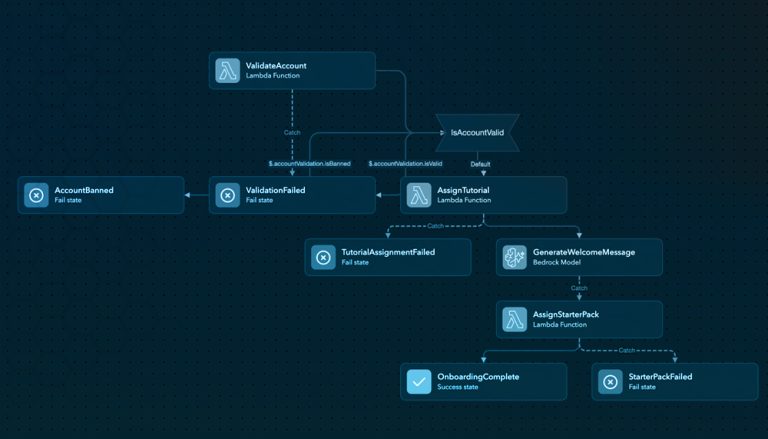
Learn how to use Amazon Bedrock in AWS Step Functions for AI workflows, prompt chaining, orchestration, automation, parallel processing, and local testing with Thrubit.
May 10, 2026
Learn what Amazon Bedrock inference profiles are, how to configure and use them, how to resolve Anthropic model access errors, and how to test Bedrock Step Functions workflows locally with Thrubit.
May 9, 2026
Learn how AWS Step Functions can run locally using AWS Step Functions Local and modern local-first workflow tools. Explore local Lambda execution, Bedrock testing, EventBridge workflows, debugging, and ZERO AWS cost development approaches.
May 9, 2026
Learn what Amazon States Language (ASL) is, how it powers AWS Step Functions and state machines, and how services like Lambda, Bedrock, SQS, S3, and EventBridge fit into workflows. Discover how to run and debug ASL workflows locally with Thrubit.
May 8, 2026
Learn what JSON data is and how it powers AWS Step Functions. Understand input output paths parameters and state transitions for building efficient workflows.
May 7, 2026
Thrubit now supports EventBridge in AWS Step Functions. Run events:putEvents locally with mock or live AWS mode, ResultSelector support, automatic Detail serialization, and zero AWS costs during development.
May 5, 2026
Explore all Amazon Bedrock models available for AWS Step Functions, including Claude, Titan, Llama, Cohere, and more. Learn how to choose the right model for your workflows and how to test Bedrock integrations locally with Thrubit to reduce costs and speed up development.
May 3, 2026 Run AWS Step Functions with SQS locally using Thrubit. Test sqs sendMessage, mock queues, and event-driven workflows without deployments or AWS costs.
May 2, 2026